EMDR Therapy in Calgary — Reprocess Trauma at the Root
EMDR helps your brain do what it was designed to do — process difficult memories so they stop running your life. Evidence-based, compassionate, and adapted to your pace. In-person SW Calgary or online across Alberta.

What Is EMDR Therapy?
EMDR stands for Eye Movement Desensitization and Reprocessing. It's a therapy developed by psychologist Dr. Francine Shapiro in the late 1980s and now one of the most well-researched trauma treatments in the world — endorsed by the World Health Organization, the American Psychological Association, and the Canadian Psychological Association.
The core idea is this: when something traumatic happens, the brain sometimes can't process the experience the way it normally would. Instead of being filed away as a past memory, it gets stored in a raw, unprocessed state — with all the original images, sounds, thoughts, and body sensations still attached. This is why trauma can feel like it's happening now even when it happened years ago.
EMDR uses something called bilateral stimulation — most commonly guided eye movements — to help the brain reprocess these stuck memories. The mechanism isn't entirely understood, but the effect is consistent: memories that once felt overwhelming begin to lose their emotional charge. They become something that happened, rather than something still happening.
You don't have to relive your trauma in detail for EMDR to work. You don't have to tell Lilly everything. You stay in the present moment, in a safe space, while your brain does the work it was designed to do.
How EMDR Works — The 8 Phases
What EMDR Treats
PTSD
Single-incident and complex PTSD — the gold-standard treatment.
Complex Trauma
Prolonged or repeated traumatic experiences.
Childhood Abuse
Early experiences that still shape how you feel today.
Single-Incident Trauma
Accidents, assaults, medical events, or sudden losses.
Phobias
Fear responses rooted in specific past experiences.
Anxiety
Especially anxiety tied to past trauma or specific triggers.
Trauma-Linked Depression
Depression that is connected to unprocessed painful memories.
Performance Anxiety
High-stakes situations that activate a fear response.
EMDR vs. Other Therapies
| Approach | EMDR | CBT | Talk Therapy | Somatic |
|---|---|---|---|---|
| Focus | Memory reprocessing via bilateral stimulation | Thought patterns and beliefs | Verbal processing and insight | Body sensations and nervous system |
| Timeline | 3–12+ sessions depending on complexity | 8–20 sessions typically | Varies widely | Ongoing, pace-based |
| Best for | PTSD, trauma, phobias, trauma-linked anxiety | Anxiety, depression, OCD | Life challenges, relationships, insight | Nervous system dysregulation, CPTSD |
Lilly integrates EMDR and somatic approaches — no need to choose just one.
What to Expect in Your First EMDR Session with Lilly
Your first session is not about doing EMDR. It's about getting to know each other.
Lilly will ask about your history, what brought you here, and what you're hoping to work through. You decide how much you share — there's no requirement to go into detail about anything you're not ready for. The purpose of this session is to understand where you're coming from and begin building the trust and safety that EMDR requires to be effective.
Before any reprocessing begins, Lilly ensures you have grounding and stabilization tools — practical strategies to help you regulate your nervous system between sessions and during them. This preparation phase is not optional or skippable. It's what makes EMDR safe.
Bilateral Stimulation — What It Actually Looks Like
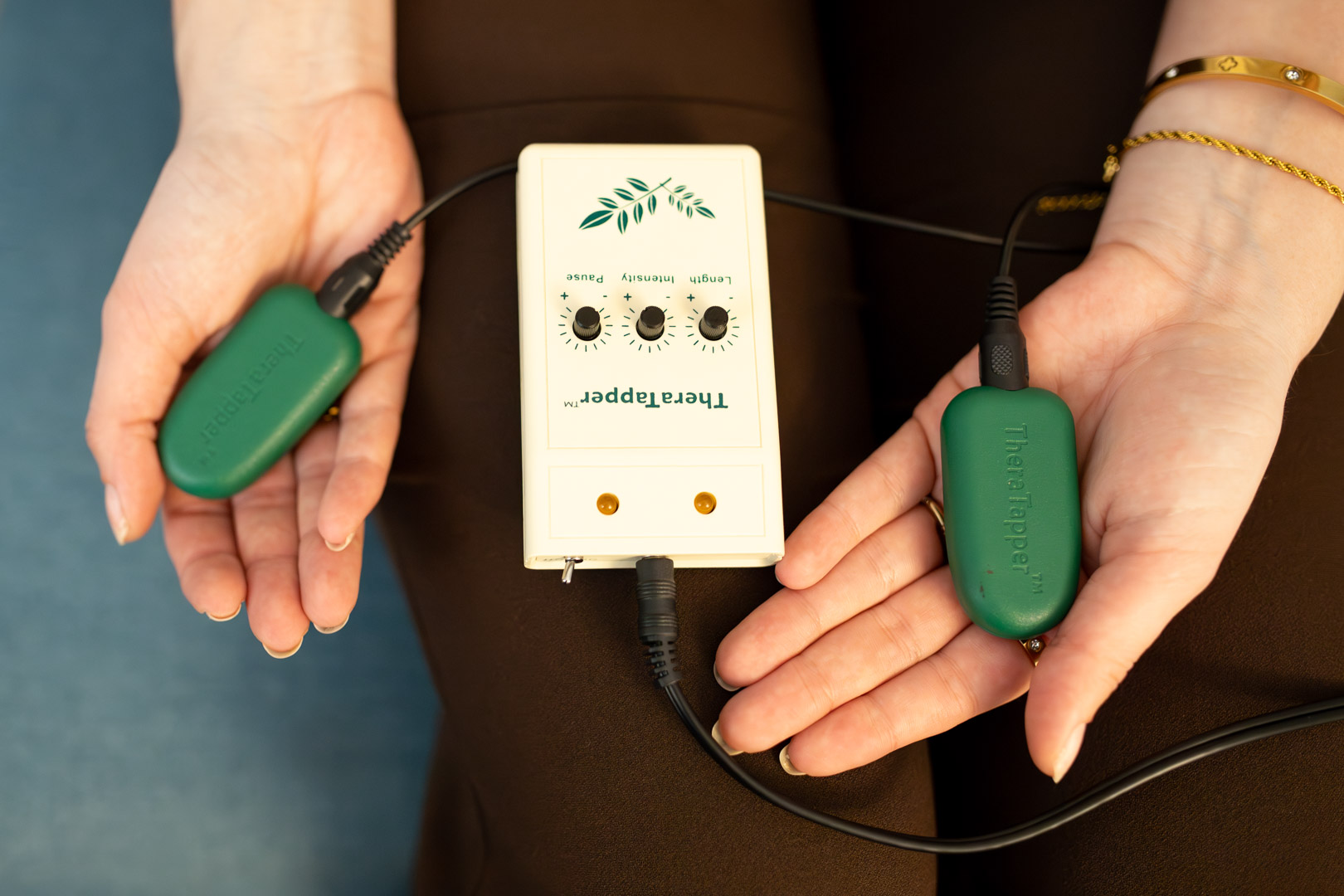
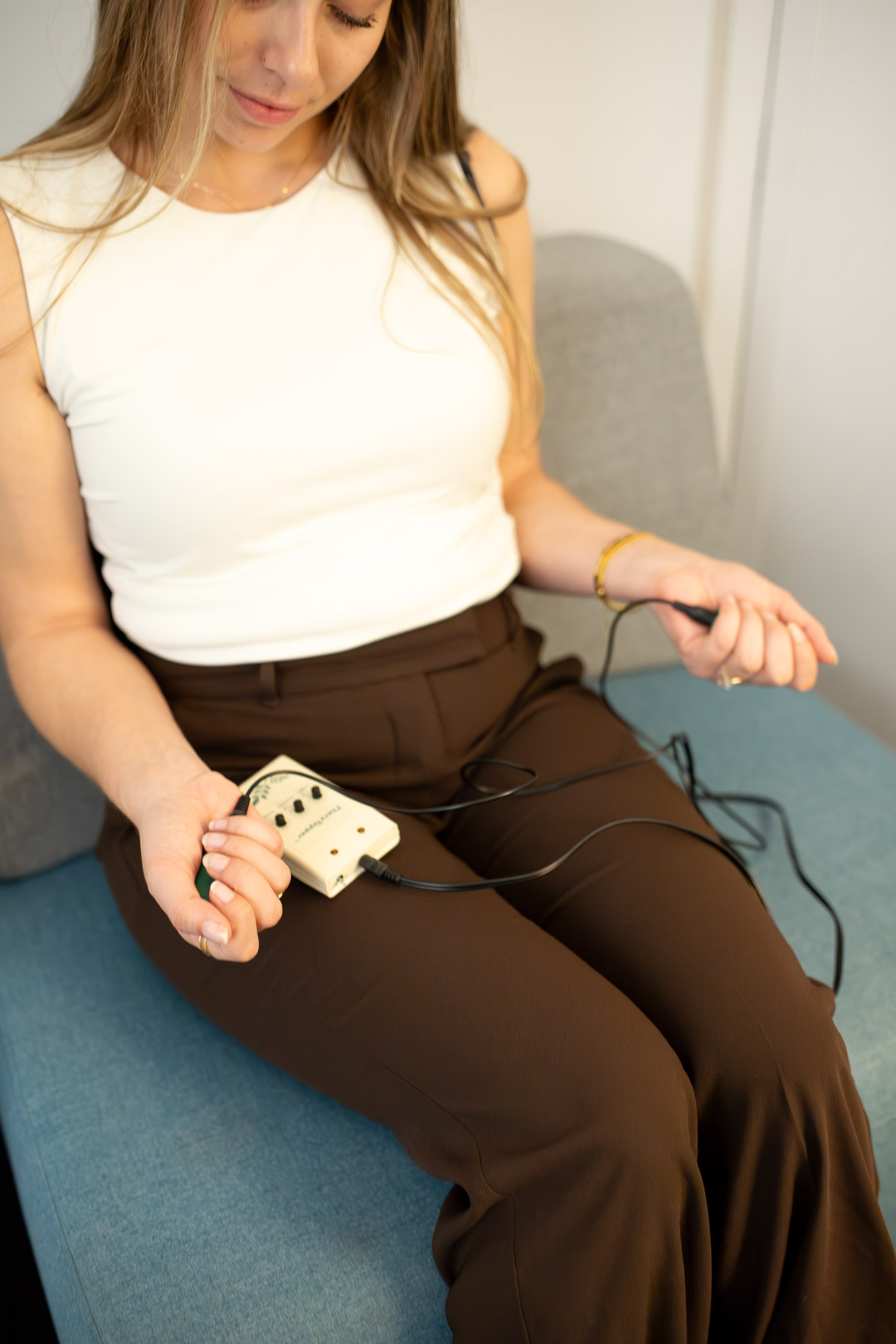
The TheraTapper — a handheld device used for tactile bilateral stimulation during EMDR sessions at Beyond Roots Counselling.
How Quickly Does EMDR Work?
For single-incident traumas — an accident, an assault, a specific experience — many people notice significant relief in as few as 3–6 sessions. That's one of the things that sets EMDR apart from some longer-term approaches.
Complex or developmental trauma — patterns built over years — typically takes longer. That doesn't make EMDR less effective; it reflects the reality that undoing decades of survival adaptations takes time. The important thing is that real change is possible.
EMDR + Somatic Therapy — Stronger Together
Lilly integrates EMDR with somatic therapy in her practice. Many clients find that somatic grounding and body awareness work supports and deepens EMDR processing — helping the nervous system stay regulated during reprocessing and integrate changes more fully afterward.
Learn more about somatic therapy with LillyRelated Services at Beyond Roots Counselling
Frequently Asked About EMDR Therapy
EMDR stands for Eye Movement Desensitization and Reprocessing. It's a structured therapy approach that uses bilateral stimulation — most commonly guided eye movements — to help the brain reprocess traumatic memories that have become "stuck." When a memory is processed correctly, it loses its emotional intensity and gets stored as a past event rather than a present threat. EMDR doesn't erase memories; it changes your relationship to them.
Take the First Step
Start Healing at the Root
Book a free 15-minute consultation with Lilly. No commitment, no pressure — just an honest conversation about what you're carrying and how EMDR might help.
Lilly Gonoratsky, MSc · Licensed Counselling Therapist, ACTA #3020 · SW Calgary & Online Alberta